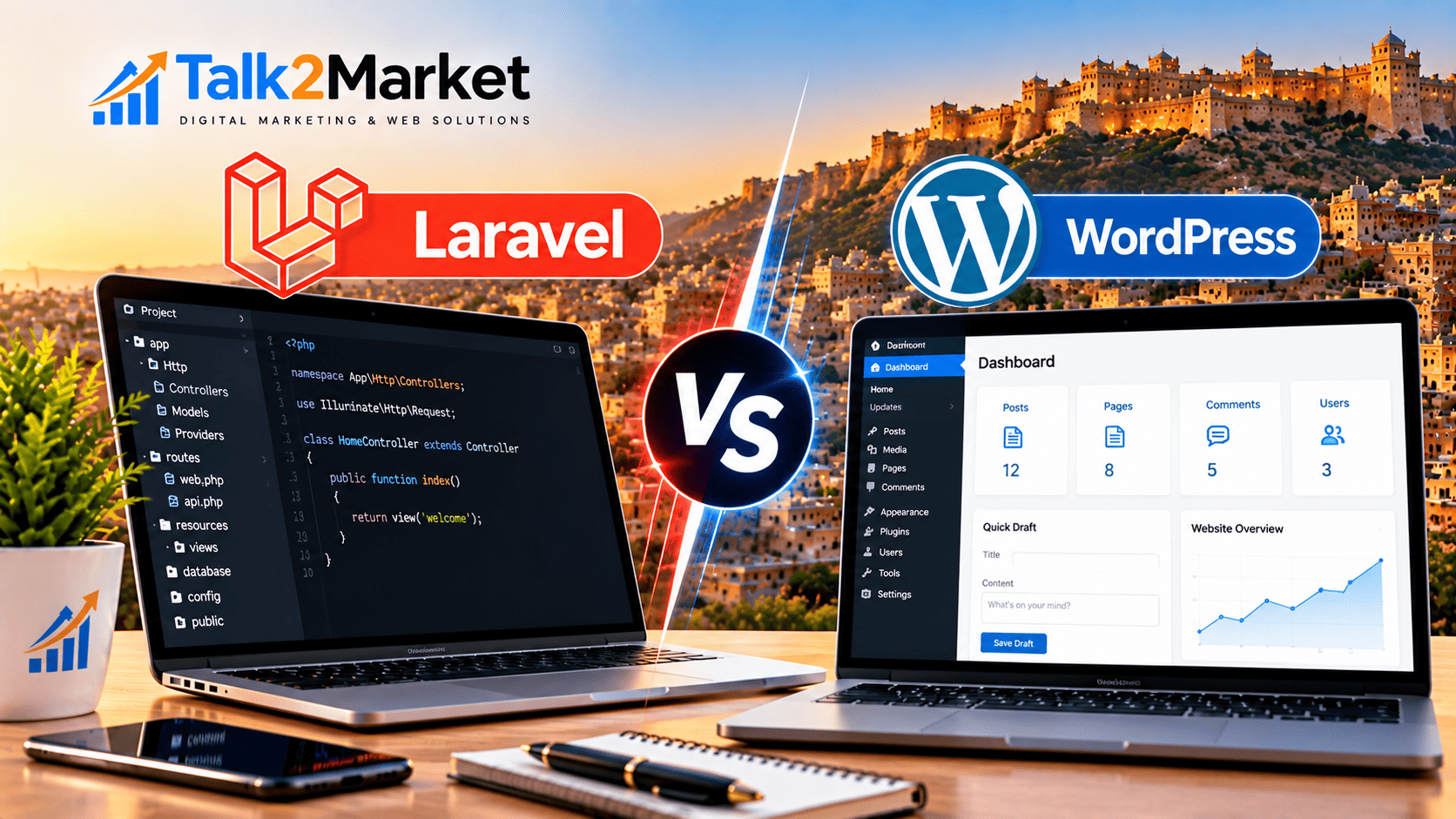
Introduction
In 2026, choosing the right development platform is more important than ever for businesses and developers aiming to build fast, secure, and scalable websites. Two of the most popular platforms dominating the web development industry are Laravel and WordPress.
While WordPress powers millions of websites globally, Laravel continues to grow as a powerful PHP framework preferred by professional developers. But which platform should developers choose today — and why?
In this guide by Talk2Market, we explore the key differences, advantages, and ideal use cases for both platforms.
What is Laravel?
Laravel is a modern PHP framework designed for building custom web applications with advanced functionality. It follows the MVC (Model-View-Controller) architecture and offers developers complete control over development.
Key Features of Laravel:
Clean and structured coding environment
High performance and scalability
Built-in security features
Custom functionality development
REST API support
Modern development tools
Laravel is ideal for complex web applications, enterprise solutions, and fully customized platforms.
What is WordPress?
WordPress is the world’s most popular CMS (Content Management System), known for its simplicity and ease of use. It allows users to build websites quickly using themes and plugins without extensive coding knowledge.
Key Features of WordPress:
Easy to use interface
Thousands of plugins and themes
SEO-friendly structure
Quick website setup
Large community support
Ideal for blogs and business websites
WordPress is best suited for small to medium websites that require fast deployment.
Laravel vs WordPress — Key Differences
1. Flexibility
Laravel provides full customization and flexibility for developers. WordPress relies heavily on plugins which may limit advanced customization.
2. Performance
Laravel offers better performance for large-scale applications because it is built from scratch. WordPress performance depends on themes and plugins optimization.
3. Security
Laravel includes strong built-in security features like authentication and protection against common attacks. WordPress can be secure but requires careful plugin management.
4. Scalability
Laravel is highly scalable and suitable for growing applications. WordPress can scale but may require heavy optimization.
5. Development Speed
WordPress allows faster development for basic websites. Laravel requires development time but delivers powerful long-term solutions.
When Should Developers Choose Laravel?
Choose Laravel if:
You need custom web applications
Complex features or integrations are required
High performance and scalability are priorities
You want full control over development
When Should Developers Choose WordPress?
Choose WordPress if:
You need a business website or blog
Fast launch is important
Budget is limited
Content management is the main focus
Laravel vs WordPress in 2026 — Industry Trends
In 2026, developers are increasingly using Laravel for custom SaaS platforms, APIs, and enterprise-level applications. Meanwhile, WordPress continues to dominate the CMS space due to its ease of use and strong ecosystem.
Many agencies now combine both — using Laravel for backend systems and WordPress for content-driven websites.
Final Verdict: Which Platform Should You Choose?
There is no universal winner between Laravel and WordPress. The right choice depends on project goals, scalability requirements, budget, and development complexity.
If you need a quick website with minimal customization, WordPress is a great choice. However, for advanced applications and long-term scalability, Laravel stands out as the better option.
Why Choose Talk2Market for Web Development?
At Talk2Market, we specialize in both Laravel development and WordPress solutions tailored to business needs. Our expert team helps clients choose the right technology stack to ensure performance, security, and long-term growth.
Conclusion
Laravel and WordPress both have their strengths in 2026. Understanding their differences allows developers and businesses to make smarter technology decisions and build future-ready digital platforms.